Nasal Cannula O2 Rate ~ The Relationship Between Oxygen Flow Rate And Fio2. Nasal cannula the use of nasal cannula on a regular and routine basis is expected for patients on the cru. (these also have smaller prongs.) the oxygen percentage provided to the patient ranges roughly from 24 to 35 percent, or the cannula may merely supply humidified air. A nasal cannula is a clear, lightweight tube that features two endpoints. Oxygen delivery with nasal cannula. The cannulae devices can only provide oxygen at low flow rates upto 5 litres per minute (l/min), delivering an oxygen concentration.
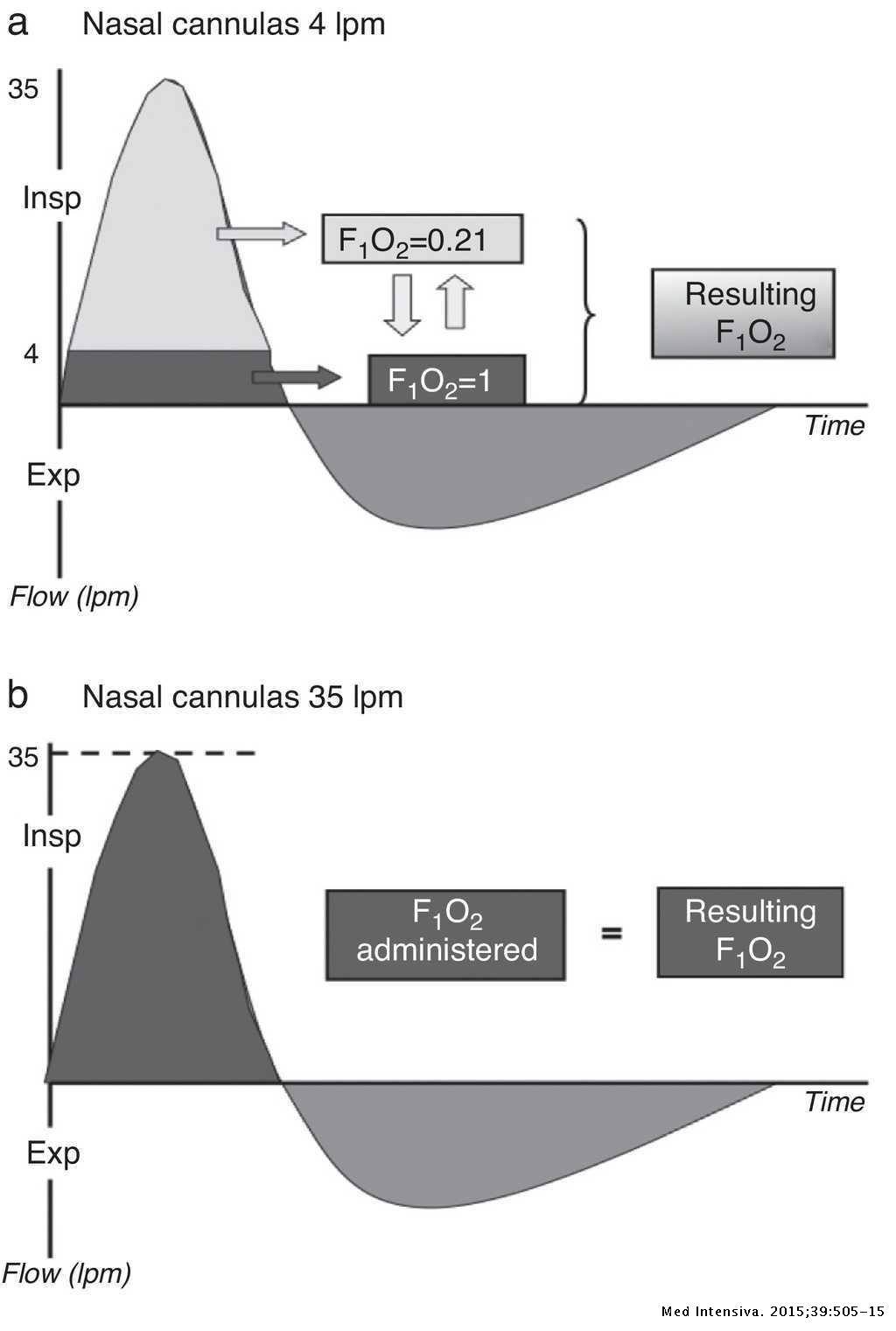
Even during quiet breathing, inspiratory flow rates are approximately 30 liters per minute, which exceeds supplemental oxygen flow (3). Fio2 measured = (o2 flow (ml/min) x 0.79) + (0.21 x v e) / v e x 100 • where minute ventilation (v e) equals the minute ventilation in ml/min (v e = vt x respiratory rate). Of the remaining 32 patients, 81% (n=26) had an actual initial flow rate within 1 l of the target flow rate; Humidified oxygen (100%) flows from a standard source, effectively delivering a pharyngeal concentration of 25% to 40% after mixing with variable amounts of room air. The main intended use of hfnc:
Principle Setup Of High Flow Nasal Cannula Oxygen Therapy An Download Scientific Diagram from www.researchgate.net Rates above 5 l/min can result in discomfort to the patient. Flow rates of up to 6 litres can be given but this will often cause nasal dryness and can be uncomfortable for patients (british thoracic society, 2008). If the inspiratory flow rate of the patient is greater than what is being provided by the cannula, the patient will entrain room air into the lungs. Even during quiet breathing, inspiratory flow rates are approximately 30 liters per minute, which exceeds supplemental oxygen flow (3). The main intended use of hfnc: watch for skin breakdown most common and inexpensive what type of patient would you use on and what safety considerations? Nasal cannula the use of nasal cannula on a regular and routine basis is expected for patients on the cru. The below nasal cannula oxygen percentage chart shows the percentage of oxygen delivered against the flow rate.
Oxygen cannulas or nasal cannulas are used to supplement oxygen to the patient.
Ni yn, luo j, yu h, liu d, liang bm, liang za. Oxygen delivery with nasal cannula. A nasal cannula is a clear, lightweight tube that features two endpoints. (these also have smaller prongs.) the oxygen percentage provided to the patient ranges roughly from 24 to 35 percent, or the cannula may merely supply humidified air. pt can eat, drink and talk. The below nasal cannula oxygen percentage chart shows the percentage of oxygen delivered against the flow rate. But patients with respiratory distress can have much higher peak inspiratory flow rates. For children receiving oxygen therapy spo 2 targets will vary according to the age of the child, clinical condition and trajectory of illness. If the inspiratory flow rate of the patient is greater than what is being provided by the cannula, the patient will entrain room air into the lungs. The nasal cannula carries 1 to 5 liters of oxygen per minute. Even during quiet breathing, inspiratory flow rates are approximately 30 liters per minute, which exceeds supplemental oxygen flow (3). Single nasal cannula for supplemental oxygen therapy. There's a new oxygen delivery device available for people with copd who are on supplemental oxygen.
The second objective of this study was to compare When a patient is on o2 by nasal cannula, the sat level will of course be higher due to o2 is continuous @ 2 liters/nc. The below nasal cannula oxygen percentage chart shows the percentage of oxygen delivered against the flow rate. Fio2 measured = (o2 flow (ml/min) x 0.79) + (0.21 x v e) / v e x 100 • where minute ventilation (v e) equals the minute ventilation in ml/min (v e = vt x respiratory rate). The below nasal cannula oxygen percentage chart shows the percentage of oxygen delivered against the flow rate.
The Role Of High Flow Oxygen Therapy In Acute Respiratory Failure Medicina Intensiva from multimedia.elsevier.es Cannulae with smaller prongs intended for infant or neonatal use can carry less than one litre per minute. When a patient is on o2 by nasal cannula, the sat level will of course be higher due to o2 is continuous @ 2 liters/nc. Precise oxygen delivery, improve gas exchange, significantly reduce the work of breathing , and create a reservoir with high f i o 2 in the. Rates above 5 l/min can result in discomfort to the patient. The second objective of this study was to compare The cannulae devices can only provide oxygen at low flow rates upto 5 litres per minute (l/min), delivering an oxygen concentration. Flow rates of up to 6 litres can be given but this will often cause nasal dryness and can be uncomfortable for patients (british thoracic society, 2008). pt can eat, drink and talk.
The first endpoint splits into two curved, and tapered nasal prongs end that is designed to fit above the upper lip of the user.
Oxygen flow rate and fio2 table The second objective of this study was to compare Nasal cannula the use of nasal cannula on a regular and routine basis is expected for patients on the cru. These patients were evaluated for changes in fraction of inspired oxygen (fio 2), ph, and pco 2 values after 24 hours. Nasal cannulas consist of two hollow prongs projecting from a hollow face piece. Humidified oxygen (100%) flows from a standard source, effectively delivering a pharyngeal concentration of 25% to 40% after mixing with variable amounts of room air. Randomized 303 infants of less than 32 weeks to either ncpap (7 cm h2o) or hhfnc (5 to 6. extended use can be very drying use with humidification. But patients with respiratory distress can have much higher peak inspiratory flow rates. For those who may need higher flows of oxygen, nasal cannula can also be high flow and carry up to 60 liters of oxygen per minute. There are also infant or neonatal nasal cannulas which carry less than one liter per minute. watch for skin breakdown most common and inexpensive what type of patient would you use on and what safety considerations? Browse our huge selection of discount oxygen nasal cannula products.
Fio2 measured = (o2 flow (ml/min) x 0.79) + (0.21 x v e) / v e x 100 • where minute ventilation (v e) equals the minute ventilation in ml/min (v e = vt x respiratory rate). The below nasal cannula oxygen percentage chart shows the percentage of oxygen delivered against the flow rate. watch for skin breakdown most common and inexpensive what type of patient would you use on and what safety considerations? The below nasal cannula oxygen percentage chart shows the percentage of oxygen delivered against the flow rate. The cannulae devices can only provide oxygen at low flow rates upto 5 litres per minute (l/min), delivering an oxygen concentration.
Emdocs Net Emergency Medicine Educationcovid 19 Oxygen Escalation Therapy And Noninvasive Ventilation Emdocs Net Emergency Medicine Education from www.emdocs.net Oxygen treatment is usually not necessary unless the spo2 is less than 92%. Even during quiet breathing, inspiratory flow rates are approximately 30 liters per minute, which exceeds supplemental oxygen flow (3). Ni yn, luo j, yu h, liu d, liang bm, liang za. (these also have smaller prongs.) the oxygen percentage provided to the patient ranges roughly from 24 to 35 percent, or the cannula may merely supply humidified air. Humidified oxygen (100%) flows from a standard source, effectively delivering a pharyngeal concentration of 25% to 40% after mixing with variable amounts of room air. For children receiving oxygen therapy spo 2 targets will vary according to the age of the child, clinical condition and trajectory of illness. But patients with respiratory distress can have much higher peak inspiratory flow rates. One patient could not tolerate the cannula.
Nasal cannula the use of nasal cannula on a regular and routine basis is expected for patients on the cru.
So my question is why. One patient could not tolerate the cannula. The cannulae devices can only provide oxygen at low flow rates upto 5 litres per minute (l/min), delivering an oxygen concentration. Flow rates of up to 60 litres of air/oxygen per minute can be delivered through wider bore humidified nasal cannula. When a patient is on o2 by nasal cannula, the sat level will of course be higher due to o2 is continuous @ 2 liters/nc. The first endpoint splits into two curved, and tapered nasal prongs end that is designed to fit above the upper lip of the user. These patients were evaluated for changes in fraction of inspired oxygen (fio 2), ph, and pco 2 values after 24 hours. A nasal cannula is generally used wherever small amounts of supplemental oxygen are required, without rigid control of respiration, such as in oxygen therapy. The below nasal cannula oxygen percentage chart shows the percentage of oxygen delivered against the flow rate. That is, do not give oxygen if the spo2 is ≥ 92%. The calculation of nasal cannula fio2 is rather easy. Even during quiet breathing, inspiratory flow rates are approximately 30 liters per minute, which exceeds supplemental oxygen flow (3). Nasal cannulas consist of two hollow prongs projecting from a hollow face piece.